
Adair County Probate Division
Probate venue in Adair County is the Probate Division of the Adair County Circuit Court. The local court is part of Missouri's 2nd Judicial Circuit, and the county research identifies the courthouse location as 106 W. Washington, Kirksville, Missouri. The Adair County Circuit Court page is the county source for the Circuit Clerk phone, court mailing address, judges, divisions, and the Case.net court-record search link. Probate should be described as a division of the Circuit Court because Missouri does not use a separate surrogate or orphans' court for Adair County.
Adair County probate records may include decedent estates, wills, small-estate affidavits, guardianships, conservatorships, minor settlements, trust-related matters, inventories, bonds, creditor claims, notices, annual settlements, final settlements, and orders of distribution. Some routine estate filings are commonly public. Other probate-adjacent matters may contain medical, mental-health, financial, juvenile, or minor-child details that are not open for broad public review.
Probate Division of the Adair County Circuit Court
106 W. Washington
Kirksville, MO 63501
Mail: P.O. Box 690, Kirksville, MO 63501
(660) 665-2552
Adair County Probate Terms
Probate records use short labels that can change the meaning of a case entry. A person reading an Adair County estate docket should first identify whether the matter is a deceased person's estate, a guardianship, a conservatorship, or a small-estate filing. These terms affect who may request copies, what filings should exist, and which private details might be restricted.
- Testator
- A person who made a will before death.
- Executor
- The person named in a will to carry out estate duties after court appointment.
- Intestate
- A death without a valid will, so estate administration follows Missouri law and court orders.
- Guardianship
- A case about personal care and decision-making for a minor or incapacitated adult.
- Conservatorship
- A case focused on managing property, income, or assets for a protected person.
The Missouri small-estate affidavit statute is one state-law source used for Adair County probate records.
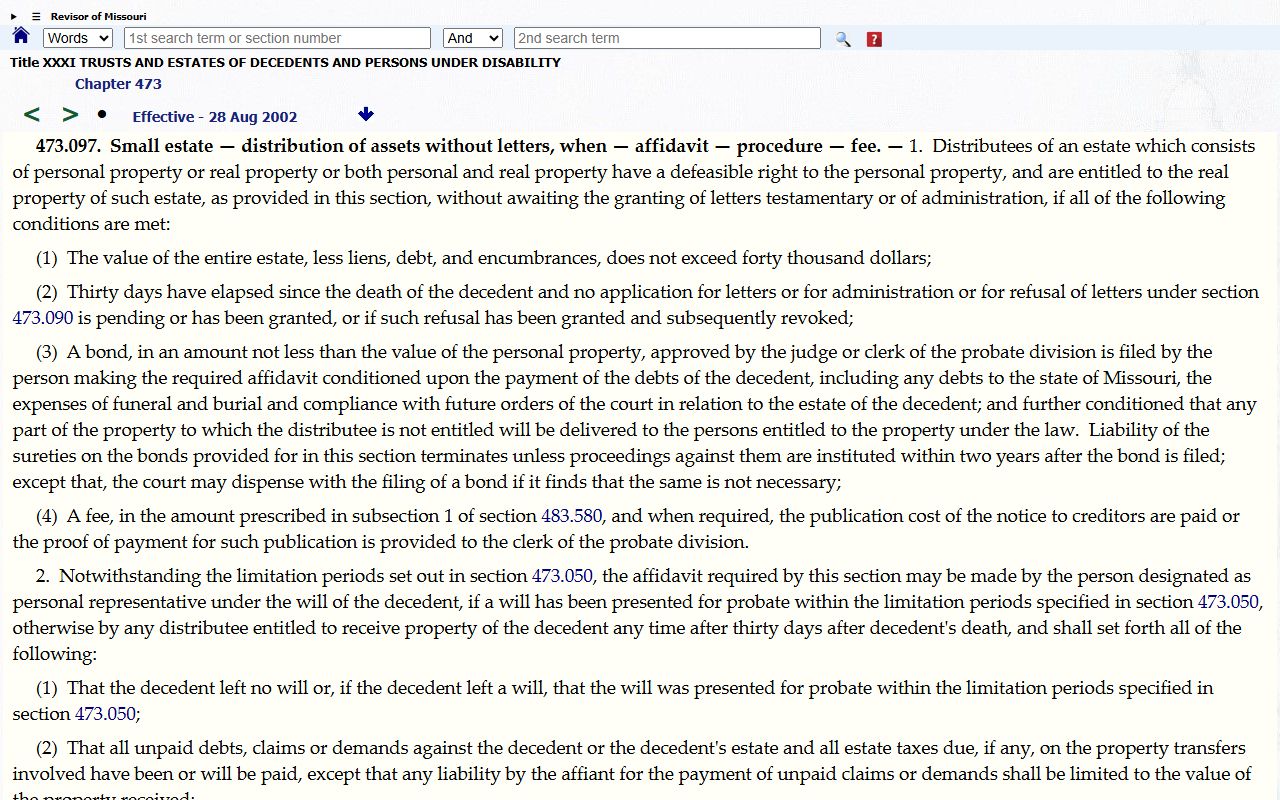
Small-estate rules can reduce the need for full administration, but local filing questions still belong with the Circuit Clerk.
Search Adair County Probate Records
Public probate cases may be searched in Missouri Case.net when the case is public and available through the Missouri court automation system. The reviewed research could not inspect the live Case.net form because automated access was blocked by a 403 warning, but official Adair County court sources confirm the Case.net route. A normal user should open the court search in a browser and search manually. Use the county or circuit filter when available so statewide results do not bury Adair County probate records.
- Start from the Adair County Circuit Court page and use the official court-record search link to reach Case.net.
- Search by case number if one is known, or use the litigant/name search for an estate, decedent, protected person, heir, or party name.
- Select the 2nd Judicial Circuit or Adair County court location when the search form offers a court filter.
- Review public docket entries for filings, appointments, letters, notices, inventories, settlements, orders, and closure entries.
- Call or visit the Circuit Clerk for certified copies, older probate records, files not online, or questions about restricted materials.
| Search Field | Use | Adair County Note |
|---|---|---|
| Case number | Best for an exact probate case | Use when found on a notice, letter, or prior order. |
| Litigant or name | Decedent, estate, protected person, or party search | Try name variations and narrow to Adair County. |
| Court or circuit | Limits statewide results | Use the 2nd Judicial Circuit or Adair County option. |
| Filing date | Helps with common names | Live field format was not inspected during research. |
What Probate Records Show
An Adair County probate file may show the petition or application that opened the matter, the will if one was filed, a death certificate reference, heirs or devisees, a proposed personal representative, bond information, letters testamentary or letters of administration, creditor notices, inventories, asset and debt statements, orders approving sales or distributions, annual settlements, final settlements, and case-closing orders. Guardianship and conservatorship files may show appointment petitions, reports, accountings, bond, and orders about care or property management.
Probate dockets often provide a case timeline rather than every document image. A docket entry may prove that an inventory, notice, or final settlement was filed, but a certified copy of the actual document must come from the Circuit Clerk if the document is public and releasable. For older files or record sets not fully online, the clerk's office is the fallback. The Adair County directory also provides county office context and general courthouse hours for planning an in-person visit.
Adair County Probate Filing Steps
Probate filing is fact-specific. The research supports a general local workflow but does not publish Adair County probate forms or a fee table. A person opening an estate should verify current filing requirements with the Circuit Clerk before bringing documents or mailing a petition. Small-estate affidavit questions should also be checked against current Missouri law and local clerk practice.
- Determine whether a will exists and whether the estate assets require probate administration.
- File the application or petition with the Adair County Circuit Court Probate Division.
- Provide the will, death certificate information, asset and debt details, heirs or devisees, and proposed personal representative information as applicable.
- Wait for the court to issue letters or an order if the filing is approved.
- Publish or give notice to creditors and heirs if required by the case type.
- File inventories, manage claims and assets, and request approval for sales or distributions when required.
- File a final settlement, accounting, or closing document before the estate is closed.
Adair County Probate Fees
The reviewed county sources did not locate a probate fee schedule. That is a limitation of the research record, not proof that no fees apply. Filing costs, copy charges, certification fees, publication costs, bond premiums, and service fees can all affect a probate matter. Call the Circuit Clerk before filing or mailing a request, especially when asking for certified copies or opening a new estate.
| Item | Amount | Best Source |
|---|---|---|
| Probate application or petition | Not located in reviewed county sources | Call Circuit Clerk |
| Certified probate copy | Not located in reviewed county sources | Call Circuit Clerk |
| Letters testamentary or administration copy | Not located in reviewed county sources | Call Circuit Clerk |
| Guardianship or conservatorship filing | Not located in reviewed county sources | Call Circuit Clerk |
Note: The absence of a published fee in the reviewed material means the amount should be confirmed before payment is prepared.
Restricted Probate Records
Routine estate filings are often public, but probate files can overlap with confidential subjects. Guardianship and conservatorship records may include medical, mental-health, financial, or personal information. Minor settlements may involve children. Juvenile-related records are restricted under RSMo 211.321, and RSMo 211.319 separates some public juvenile pleadings and orders from confidential file materials such as medical reports, psychological reports, social histories, home studies, Children's Division material, and police reports.
The Missouri juvenile confidentiality source is relevant when Adair County probate records touch minors or protected persons.
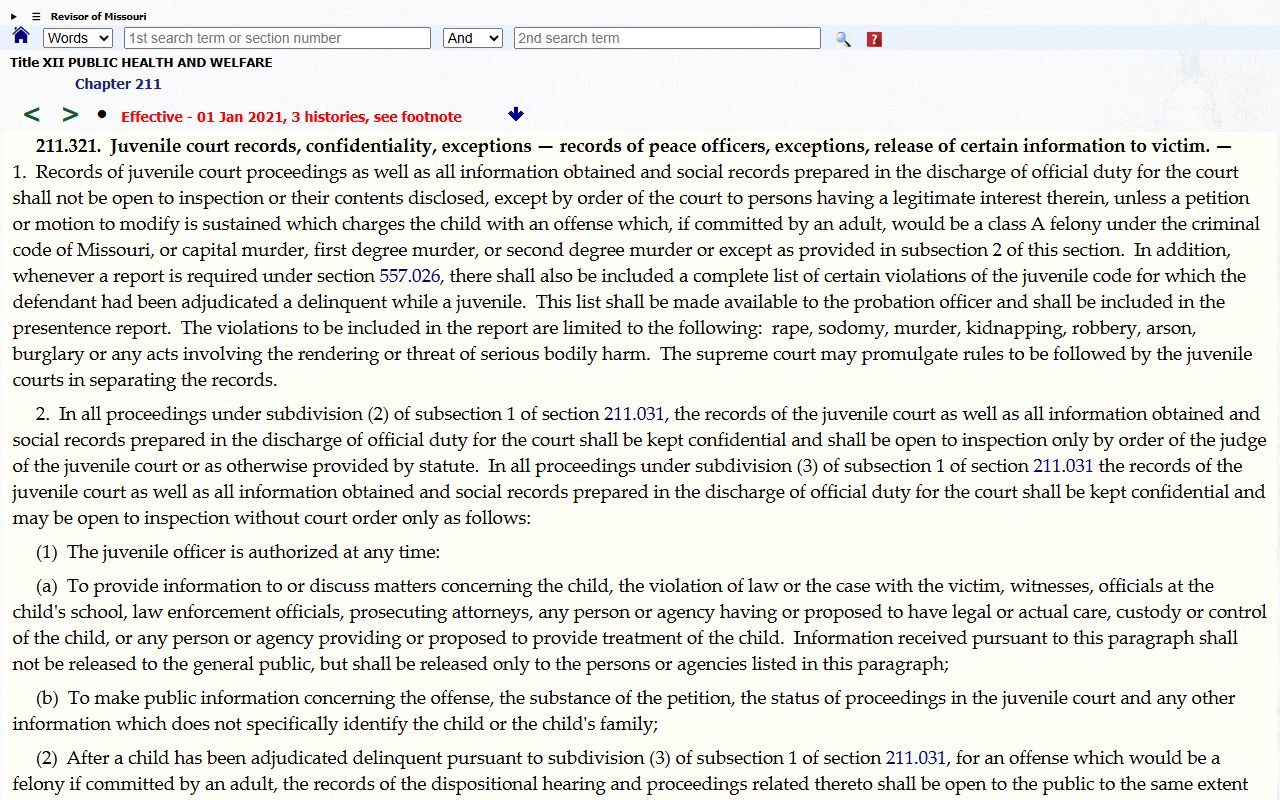
This limit is why a docket may be visible while some documents or identifying details are withheld.
The juvenile abuse and neglect records statute provides another restriction point for Adair County probate-adjacent records.
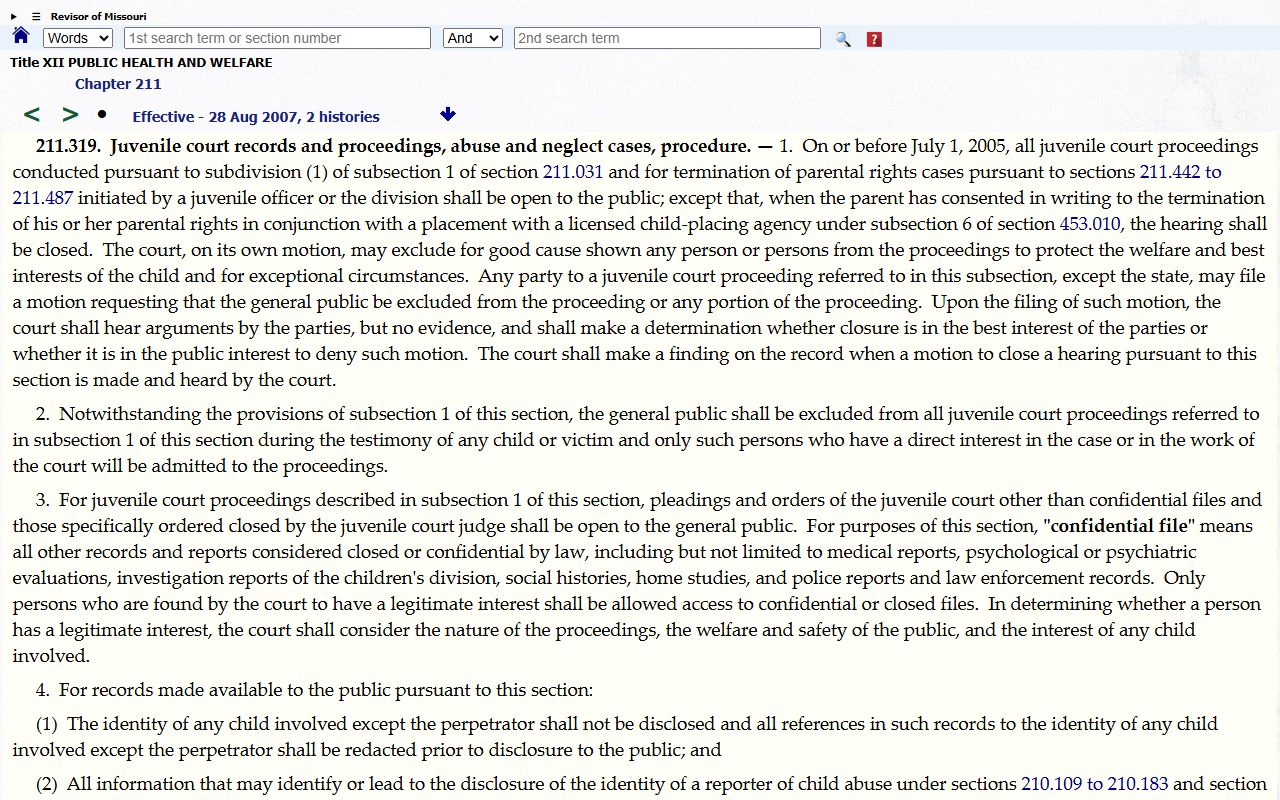
Those confidentiality rules should be read with local court instructions when a probate file involves a minor or family-court overlap.